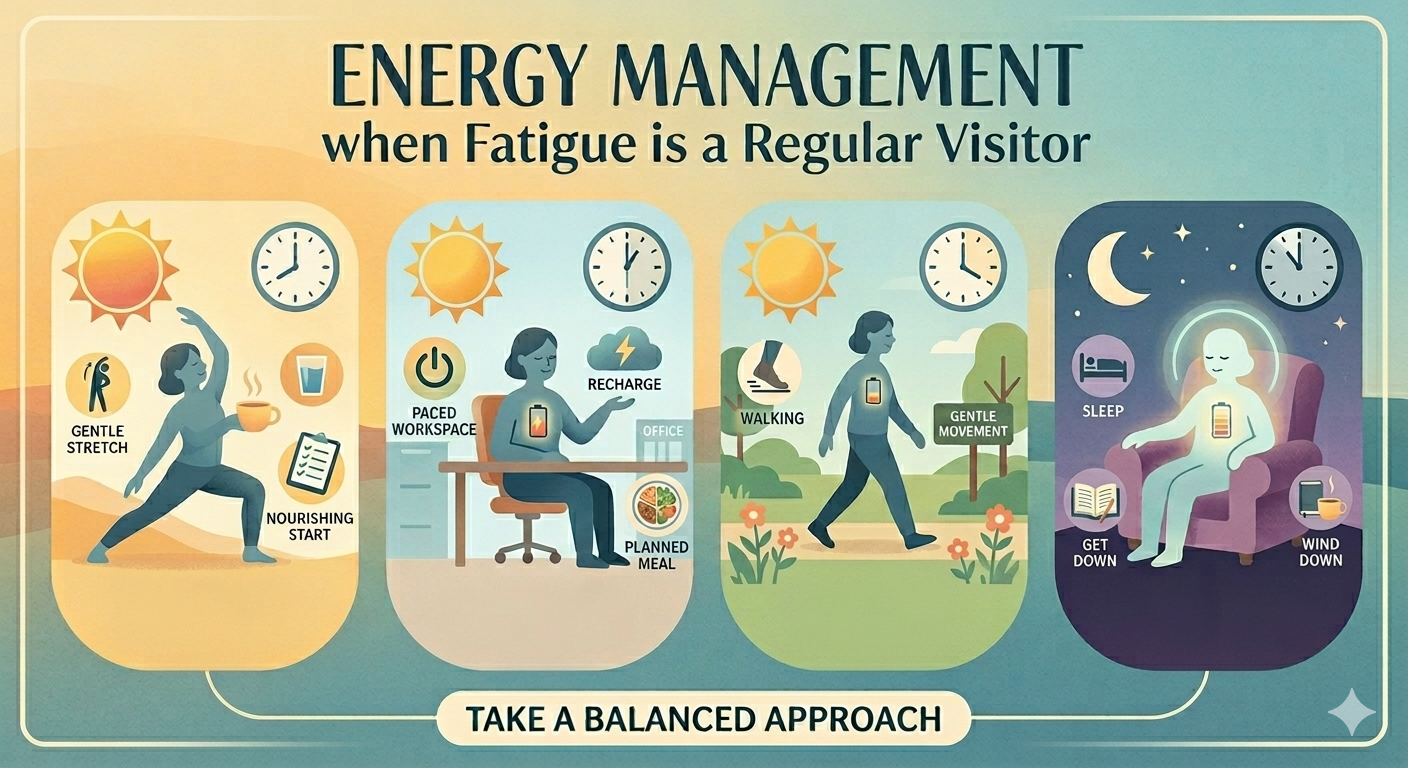

By Liel Bridgford [4 Min read]
Fatigue for Disabled People
Fatigue is one of the most common experiences for disabled people. There are many reasons why disabled people might experience fatigue and difficulties managing energy. For example:
- Fatigue is a symptom of many conditions
- Living in a world not built for us creates additional barriers and energy expending tasks
- Disabled people need to communicate our needs more frequently than non-disabled people, which uses more energy
- Many disabled people have experienced traumas in their life, and the impacts of these can affect our energy
- Sleep issues are common when we experience pain, physical discomfort or incontinence, all common for disabled people
- Neurodivergent people often have varying sleep and focus experiences, which can impact fatigue
The Barriers to Manage Fatigue
There are endless barriers that can get in the way of managing our fatigue, but many fit into one of the following categories:
- Fatigue itself! The constant experience of being fatigued can get in the way of implementing any change in our life.
- Not enough supportive people who can help encourage us along the way
- Competing demands on our time and energy
- Financial barriers or need to work more than is sustainable
- Past experiences of trying to address fatigue that have been unsuccessful
- Thoughts and feelings that everything is ‘too much’ or that changes are not ‘worth it’ for the effort
- Difficulty tolerating the discomfort of changing our routine
Where to start
To manage your energy and fatigue most effectively, it is important to start with the following:
- Identify the contributing factors to your fatigue.Whether it’s a symptom, competing demands, poor sleep quality, or weather, identifying what adds to your fatigue is useful.
- Get to know your fatigue and energy patterns. This includes learning which activities spend the most energy for you, and which recharge your batteries. It can also involve understanding the impact of weather, noise, and stress on your fatigue. Start by tracking your energy levels and activities for a week.
- Identify your barriers to addressing fatigue. Using the list above as a guide, write down what you have tried before, what worked or didn’t, and what would help you improve your fatigue management. It can be useful to ask yourself something like ‘If I had all the support I need, what would that look like?’
Implement Effective Strategies
There is no magic formula that will make your fatigue disappear, but there are strategies that can make a difference in the long term.
After you have identified the contributing factors to your fatigue, understood your patterns of energy and fatigue, and wrote down your personal barriers, you are ready to implement the following strategies:
- Identify a small, initial goal, and the barriers to achieving it. Your goal can be for instance to address one of the things that make your fatigue worse, and the barriers are the things that stand between you and achieving that goal now. Keep making your goals smaller and smaller until you feel very confident to be able to achieve it within a few days.
- Use a pacing system that suits you. My personal favourites are the Spoons Theory and the traffic light system. The traffic light pacing system divides your activities into three categories according to the level of energy you spend doing them: high (Red), medium to neutral (Yellow), and restorative activities (Green). This allows you to balance your schedule according to your energy, thereby sustaining your energy for longer. Use our Traffic Light System tool to help you implement this in your life.
- Optimise sleep hygiene – although many people experience fatigue even when sleeping well, sleep hygiene affects our sleep quality and quantity, which in turn impacts fatigue and energy management. Review your bedtime habits, and gradually improve your sleep routine as needed. Focus on one small change at a time, implementing it for a few days before introducing another. For example, start by removing your phone from the bedroom, then introduce a no-screen 30 minute gap before bed. Go to The sleep foundation for more.
- Simplify and reduce your load – although it sounds simple, this is one of the most effective, but often-missed strategies for energy management. Focus on finding tasks you can delegate or delete, as small as they may be. For instance, some people ask for help from loved ones with laundry, or with organising social events. Write down at least three activities from your schedule which can be either removed or given to someone else. Even delegating tasks such as cleaning the toilet to another person can have a big impact in the long term.
- Review how things are going regularly, and adjust what isn’t working.
- Reach out for more support when you need it. You can start by contacting a disability friendly Psychologist.
Liel Bridgford
Psychologist | Writer | Educator
Kultivate Founder & Director